What Nobody Tells You About Launching a B2B SaaS as a Solo Founder
—
I built and launched Aiella, a free EU AI Act risk assessment tool, in 14 weeks. I did everything myself. The architecture, the ML pipeline, the frontend, the email delivery, the PDF generation, the CI/CD pipeline, the WordPress marketing site, the blog posts, the legal docs, the trademark filing, the social media, the outreach.
The product works. It processes real submissions, classifies real AI systems, and sends real compliance reports to real email addresses.
But the launch did not go the way I expected. Here is what actually happened.
Nobody Cared at First
My LinkedIn post announcing the launch got zero engagement. Not low engagement. Zero. No likes, no comments, no shares. Nothing.
I have 83 LinkedIn connections. I posted what I thought was a compelling, well-written announcement about a product solving a real compliance problem for engineering teams. The algorithm showed it to maybe 20 people. None of them interacted with it.
This is the part that nobody tells you. You can build something real, write a thoughtful announcement, and publish it to absolute silence. It is not a reflection of your product. It is a reflection of your network size. LinkedIn’s algorithm needs initial engagement to distribute a post further. With 83 connections, there is no critical mass to trigger distribution.
The lesson: build your network before you need it. I did not do this. I was heads down building for 14 weeks and then expected the world to notice when I emerged. That is not how distribution works.
Hacker News Flagged Me
I planned my Hacker News Show HN launch carefully. I wrote the post, prepared the first comment, set my alarm for 5am Pacific to catch the 8am Eastern window. I submitted at exactly the right time.
It was flagged within minutes. My post never appeared on the front page. It was invisible to the entire HN community.
I emailed the moderators. No response. I emailed again the next day. No response. A week later, still nothing.
I later learned that new accounts submitting a URL that looks like a SaaS product trigger HN’s automated spam filter. My account was days old with almost no comment history. From HN’s perspective, I looked like spam.
The lesson: create your HN account months before you plan to launch. Comment on threads regularly. Build karma and account age. The community rewards participation, not promotion. I did this in reverse order and paid for it.
1,274 Submissions Turned Into 51
Within two weeks we had 1,274 form submissions. I was ecstatic. Then I looked at the data.
Company names like “7Qs8LFNyVJ” and “ezhpjy3BPg.” One domain submitted 136 times using dozens of different employee email addresses, with randomly generated company names, at all hours of the day and night. Nearly half of all submissions were automated bot traffic.
After filtering out bots, consumer email providers, and duplicates, I had 51 legitimate company leads. 30 were classified high-risk. 21 were minimal-risk.
I almost posted “1,000+ assessments in week one” on LinkedIn. I am glad I looked at the data first. That number would have been embarrassing to walk back.
The lesson: filter your data before you celebrate it. If you have a public-facing form with no CAPTCHA, bots will find it faster than real users. We added Cloudflare Turnstile (free) and the bot traffic stopped immediately. Should have done it on day one.
The AWS Bill Was Absurd
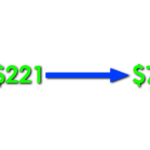
I built the infrastructure on AWS EKS because I wanted autoscaling, rolling deployments, and the operational maturity of Kubernetes. The projected monthly bill after two weeks was $221.
For a product processing 50 real requests per week.
The EKS control plane alone costs $73/month regardless of traffic. Add EC2 nodes, the Application Load Balancer, data transfer, and miscellaneous charges and you are well over $200/month for a pre-revenue product.
I migrated everything to Lightsail Container Service in an afternoon. Same Docker images, same application code, same functionality. Monthly bill: $7.
The lesson: start with the smallest infrastructure that works. You can always scale up. I chose infrastructure for the application I hoped to have rather than the one I actually had.
The Things That Actually Worked
Reddit worked. I posted in r/AIGovernance asking for genuine feedback and got thoughtful, technically sophisticated comments. One person asked about how the classifier handles edge cases between risk tiers. Another asked about connecting runtime monitoring signals to Article-level evidence trails for auditors. These are exactly the conversations that lead to design partner relationships.
The product itself worked. Every submission that was not a bot received a real, useful compliance report. The classification accuracy held up across diverse use cases. The PDF reports looked professional. The email delivery was reliable. The technical foundation is solid.
Writing worked. Blog posts about EU AI Act Article 12 logging requirements and the enforcement deadline situation are generating search traffic. The content is genuinely useful to the people who find it, which is the only content strategy that compounds over time.
Personal outreach worked better than public posts. A direct email to 30 high-risk leads from a founder who built the product himself and can answer technical questions is more valuable than a LinkedIn post to 83 connections.
What I Would Do Differently
I would build my distribution channels before building the product. Spend 3 months commenting on HN, posting on LinkedIn, engaging in Reddit communities, and connecting with people in the AI governance space. Then build the product with an audience already paying attention.
I would add CAPTCHA protection on day one. The honeypot and rate limiting I implemented were not enough. Bots are more sophisticated than I gave them credit for.
I would start on Lightsail from the beginning instead of building on EKS. The Kubernetes experience was educational but it was not what the product needed. Every hour I spent configuring KEDA scalers and ALB ingress annotations was an hour I could have spent on distribution.
I would be more honest with myself about what launch day actually looks like for a solo founder with no audience. It is not a front-page HN moment. It is a quiet start followed by slow, steady work to find the people who need what you built.
Where Things Stand Now
Aiella has 51 real company leads. 30 of them have AI systems classified as high-risk under the EU AI Act. I have sent personal outreach emails to all of them. I am waiting for responses and working on the next phase of the product: a monitoring SDK that engineering teams can import like a Python library to automatically document compliance at inference time.
The infrastructure runs on $7/month. The product is live. The bot protection is working. The blog is generating traffic. The Reddit conversations are real.
It is not the explosive launch I imagined. But it is a real start with real users and real data. Everything from here is iteration.
The One Thing I Got Right
I shipped. The product exists. It works. Real companies have used it to understand their EU AI Act obligations. The reports are accurate, the infrastructure is stable, and the foundation is solid enough to build on.
Most side projects never launch. Most SaaS ideas stay in Notion. Most founders wait until everything is perfect before showing their work to anyone.
I built it in 14 weeks and put it in front of real users. Some of them were bots. Some of them bounced. But 51 of them were real. And that is 51 more than I would have had if I had waited for the perfect launch.