Pope Leo XIV Just Wrote 42,000 Powerful Words About AI. Here Is Why That Matters.
Table of Contents
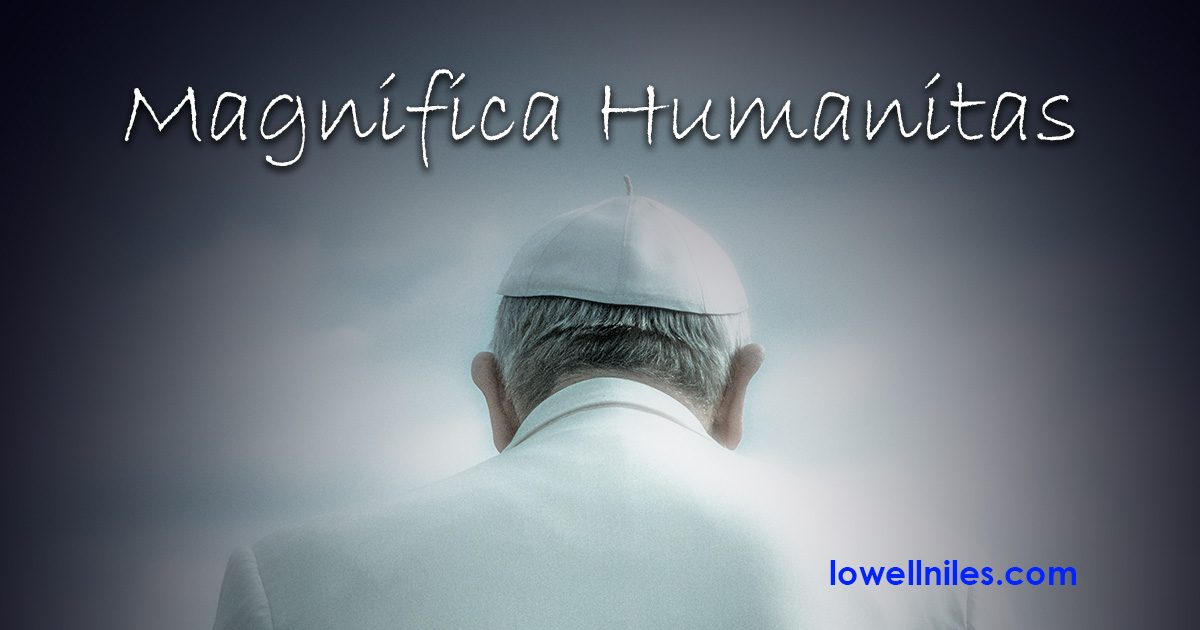
On May 25, 2026, Pope Leo XIV stood in the Vatican’s Aula Nuova del Sinodo and presented his first encyclical to the world. It was not about theology in the traditional sense. It was about artificial intelligence.
The document, titled “Magnifica Humanitas” (Magnificent Humanity), runs to roughly 42,300 words. For context, the entire EU AI Act is about 45,000 words. The Pope essentially wrote a competing document of similar length and moral weight, addressed not to legislators but to the entire world.
I am not Catholic. I am an engineer who builds AI systems for a living. And I think this document matters far more than most of the tech industry is giving it credit for.
What the Pope Actually Said
A few things stand out from the coverage and excerpts that have been published.
First, Leo was direct about the concentration of power. He called for AI data ownership not to be left solely in private hands, and criticized the fact that so much of the world’s AI infrastructure is controlled by a small number of private companies. This is not a fringe position. It is a mainstream concern among governance researchers and policymakers that rarely gets stated this plainly by someone with a global platform.
Second, he drew a hard line on autonomous weapons. He said it was “not permissible” to entrust irreversible, lethal decisions to AI systems, and expressed concern that some autonomous weapons have advanced “practically beyond any human reach to govern them.” This puts the Vatican in direct conflict with the current direction of US defense policy, which is moving aggressively toward AI-enabled autonomous systems.
Third, and most relevant to the broader governance conversation, he called for concrete institutional structures rather than vague ethical commitments. “It is not enough to invoke ethics in the abstract; robust legal frameworks, independent oversight, informed users and a political system that does not abdicate its responsibility are required.” (PBS News) That sentence could have been written by any serious AI governance researcher. Coming from the Pope, it reaches an audience those researchers cannot.
Why the Tech Industry Is Underreacting
The tech industry’s response has been largely to note the event, observe that the Anthropic co-founder Chris Olah attended the Vatican launch, and move on. That is a mistake.
Encyclicals are not press releases. They are documents that shape Catholic social teaching for generations. There are approximately 1.4 billion Catholics in the world. The Pope’s position on AI will inform the views of bishops, priests, politicians, voters, and institutional investors in every country where Catholics have influence, which is most of them.
The EU AI Act took years to negotiate and covers 27 countries. The Magnifica Humanitas was written by one person and reaches a global audience instantly. The mechanism of influence is different but the scale is comparable.
The Human Oversight Question
The part of Leo’s argument I find most technically interesting is the human oversight question. He is not saying AI is bad. He is saying that humans must remain responsible for consequential decisions, particularly irreversible ones.
This is also what Article 14 of the EU AI Act says, in much drier language. High-risk AI systems must be designed to allow human oversight. Humans must be able to understand, monitor, and override AI outputs. The system cannot be designed in a way that makes meaningful human review impossible.
What the Pope adds that the regulation does not is a moral framing for why this matters. It is not just a compliance requirement. It is a statement about what kind of relationship between humans and technology is acceptable. Tools serve people. People do not serve tools. When a system becomes so complex or so fast that humans can no longer meaningfully govern it, something important has been lost regardless of whether the outcomes are technically good.
The Autonomous Weapons Problem
Leo’s concern about autonomous weapons is worth taking seriously on technical grounds, not just moral ones.
The challenge with autonomous weapons is not just that they can make lethal decisions without human authorization. It is that the speed and complexity of modern warfare creates pressure to remove humans from the loop entirely because human reaction times are too slow. Once you are in a conflict where both sides have autonomous systems operating at machine speed, the humans nominally in command are functionally observers. They set the parameters in advance and then watch.
This is not a hypothetical. It is the direction multiple militaries are heading right now. The Pope’s concern that some systems have advanced “practically beyond any human reach to govern them” is not hyperbole. It is a reasonably accurate description of where certain autonomous weapons programs are today.
What This Means for AI Governance
The Magnifica Humanitas is not going to change what any AI company does next quarter. It is not regulation. It has no enforcement mechanism. Nobody gets fined for ignoring it.
But it does three things that matter for the longer arc of AI governance.
It elevates the conversation. AI governance has largely been a technical and legal discussion happening among specialists. A papal encyclical makes it a moral and political discussion that ordinary people can engage with. That changes who participates in the governance conversation.
It creates political cover. Politicians in heavily Catholic countries who want to push for stronger AI regulation now have explicit moral authority for that position. That is not nothing. Political will is often the binding constraint on regulation, not the technical frameworks.
It names the right problem. The document’s central concern, that AI concentration of power in private hands without adequate accountability structures is dangerous, is correct. The EU AI Act addresses this partially. The US has no equivalent framework. The Vatican has now put its weight behind the argument that this matters.
A Personal Note
I build AI compliance tools. I spend a lot of time thinking about what it means for AI systems to be accountable, transparent, and subject to meaningful human oversight. Most of that thinking happens in the language of Articles and risk tiers and technical documentation requirements.
Reading the Magnifica Humanitas coverage reminded me that the same concerns can be expressed in a completely different register, one that reaches people who will never read the EU AI Act but who care deeply about what kind of world they are building for their children.
The Pope and the EU legislators are, in their very different ways, saying the same thing. Technology does not govern itself. The people who build it and deploy it are responsible for what it does. And the structures we build to hold that responsibility need to be real, not just aspirational.
That seems right to me.
—
Lowell Niles is the founder of Aiella, an AI compliance monitoring platform. He writes about AI governance, engineering, and the EU AI Act at lowellniles.com.